

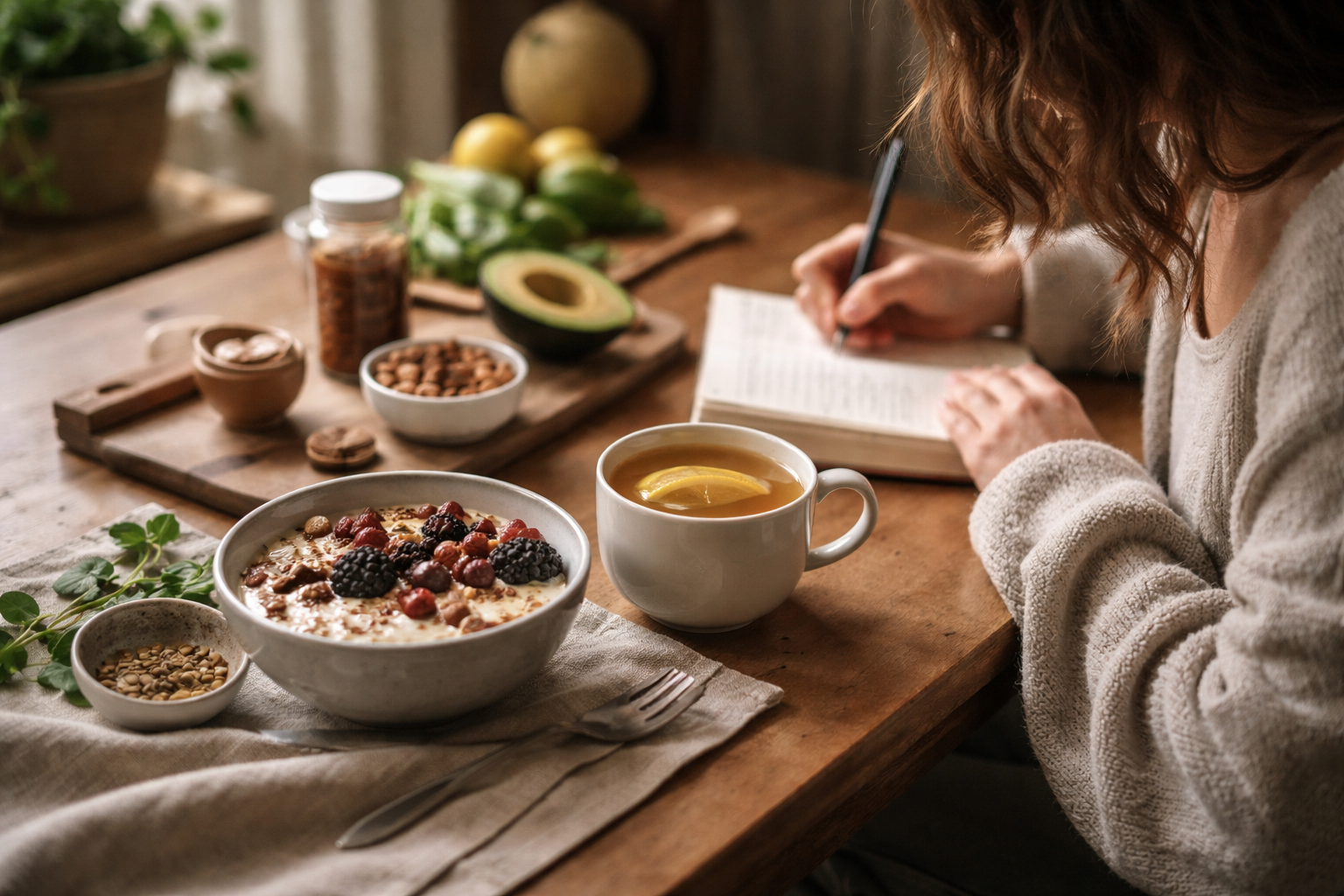
There was a time when I searched everywhere for better sleep — supplements, routines, white noise playlists — but I overlooked something simple: foods for stress relief and better sleep. Once I began paying attention to how my daily meals influenced my nervous system, everything shifted quietly. My evenings felt softer. My mind slowed down more easily. Sleep stopped feeling like a battle.
If you’ve been wondering what to eat to reduce stress naturally and improve sleep quality, this guide offers grounded, sustainable habits — no extremes, no rigid rules. Just thoughtful nourishment that supports your body’s natural rhythms.
Why Foods for Stress Relief and Better Sleep Matter
Stress and sleep are deeply connected. When stress hormones remain elevated during the day, it becomes harder to wind down at night. Poor sleep then lowers your resilience the next day — creating a cycle.
Choosing the right foods for stress relief and better sleep helps support:
- Balanced blood sugar
- Healthy cortisol rhythms
- Nervous system regulation
- Serotonin and melatonin production
According to the Sleep Foundation, diet patterns and meal timing influence sleep quality and circadian rhythms.
Harvard Health also explains how stable blood sugar plays a role in mood and stress management (https://www.health.harvard.edu).
Food isn’t a cure-all — but it is a daily lever we can gently adjust.
Magnesium-Rich Foods for Stress Relief and Better Sleep
Magnesium is often discussed when people search for foods for stress relief and better sleep — and for good reason. It supports muscle relaxation and nerve function.
Magnesium-rich foods include:
- Spinach and leafy greens
- Pumpkin seeds
- Almonds and cashews
- Black beans
- Dark chocolate (70%+ cacao)
Rather than focusing on supplements first, I began incorporating these foods consistently into meals. A handful of nuts in the afternoon. Seeds sprinkled on oatmeal. Dark chocolate after dinner instead of sugary desserts.
The National Institutes of Health outlines magnesium’s role in nerve and muscle function (https://ods.od.nih.gov/factsheets/Magnesium-Consumer/).
Small additions, repeated daily, can make a noticeable difference over time.
For more nutrient-focused guidance, explore our Nutrition category.
Protein and Complex Carbohydrates: Foundational Foods for Stress Relief and Better Sleep
When blood sugar spikes and crashes, cortisol often follows. One of the simplest ways to support calmer evenings is to start the day with balanced meals.
A steady breakfast might include:
- Eggs or Greek yogurt
- Oats or whole-grain toast
- Nuts or seeds
- Fruit
Protein helps stabilize blood sugar, while complex carbohydrates support serotonin production — a neurotransmitter connected to relaxation and sleep cycles.
In the evening, balanced carbohydrates (like sweet potatoes, quinoa, or rice) can actually support better sleep when paired with moderate protein and vegetables.
This isn’t about cutting carbs. It’s about choosing steady, whole-food sources that nourish rather than overstimulate.
You can find more rhythm-based guidance in our Wellness section.
Omega-3 and Anti-Inflammatory Foods for Stress Relief and Better Sleep
Chronic stress can increase inflammation in the body. Including anti-inflammatory foods may help support overall nervous system balance.
Consider adding:
- Fatty fish like salmon or sardines
- Chia seeds and flaxseeds
- Walnuts
- Olive oil
- Colorful vegetables and berries
These foods support brain health and may contribute to steadier mood patterns.
When I began focusing on whole, colorful meals rather than convenience foods, I noticed my energy felt less chaotic. Fewer spikes. Fewer crashes. More consistency.
For more practical evening wind-down ideas, visit our Mind & Mood guides.
Foods to Limit for Better Sleep
Just as important as adding calming foods is gently reducing overstimulating ones.
If better sleep is your goal, consider:
- Limiting caffeine after early afternoon
- Reducing heavy, late-night meals
- Minimizing alcohol close to bedtime
- Avoiding large amounts of refined sugar at night
Caffeine can stay in the body longer than many realize. Even if you fall asleep easily, deep sleep quality may be reduced.
Instead of late-night snacks, try:
- Herbal tea (chamomile, lemon balm)
- A small portion of yogurt with seeds
- Warm milk with cinnamon
These subtle shifts support a calmer transition to sleep.
Our Natural Living section offers more evening routine ideas.
Creating a Daily Pattern Around Foods for Stress Relief and Better Sleep
The most powerful habit isn’t one specific food — it’s consistency.
Your body responds to rhythm. Regular meals. Steady hydration. Predictable evening wind-down cues.
Here’s a simple daily checklist:
☐ Eat protein within 90 minutes of waking
☐ Include magnesium-rich foods daily
☐ Add omega-3 sources weekly
☐ Avoid caffeine after 2 PM
☐ Finish dinner 2–3 hours before bed
Choose one habit at a time. Practice it for a week. Observe how you feel.
Better sleep isn’t built overnight. It’s built in the small, steady choices you repeat.
FAQ: Foods for Stress Relief and Better Sleep
1. What are the best foods for stress relief and better sleep?
Magnesium-rich foods (leafy greens, nuts, seeds), complex carbohydrates, fatty fish, and balanced protein meals support nervous system regulation and sleep quality.
2. Can changing my diet really improve sleep?
Yes. Diet influences blood sugar stability, hormone balance, and neurotransmitter production — all of which affect sleep cycles and stress response.
3. What foods help calm anxiety naturally?
Leafy greens, omega-3 rich fish, whole grains, nuts, and seeds may support mood stability due to their nutrient content.
4. Is magnesium good for stress and sleep?
Magnesium supports muscle relaxation and nerve function, contributing to a calmer state before bedtime.
5. How long does it take for foods to affect sleep quality?
Some changes (like adjusting caffeine timing) can show results within days. Broader dietary patterns may take several weeks of consistency.