
Quick Answer
Magnesium is an essential mineral involved in hundreds of biochemical reactions throughout the body, including those that support normal brain and nervous system function. It helps maintain healthy nerve signaling, muscle function and energy production. Eating magnesium-rich foods such as leafy greens, nuts, seeds, legumes and whole grains as part of a balanced diet can help support overall brain health.
Key Facts About Magnesium and Brain Health
| Topic | Details |
|---|---|
| Nutrient | Magnesium |
| Primary Role | Supports normal nerve and muscle function |
| Found In | Leafy greens, nuts, seeds, legumes, whole grains |
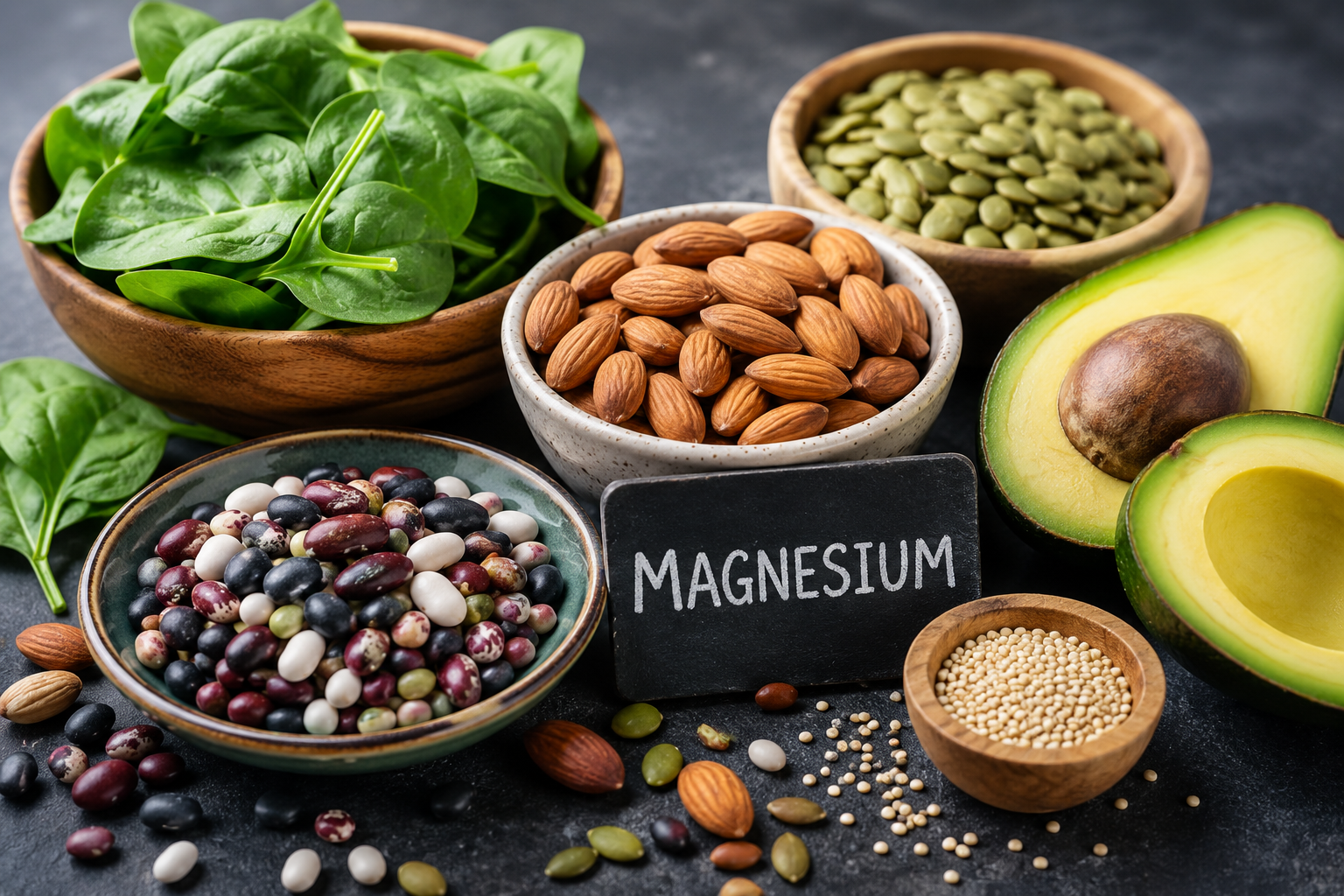
| Best Food Sources | Pumpkin seeds, almonds, spinach, black beans, avocado |
| Supplements | Available in several forms, including glycinate, citrate, oxide and L-threonate |
| Reading Time | 16–18 minutes |
What the Research Says About Magnesium and Brain Health
Magnesium has been studied extensively because it plays an essential role in the nervous system. It contributes to normal nerve transmission, muscle contraction, energy metabolism and protein synthesis.
Researchers continue to investigate how magnesium intake relates to overall cognitive wellness, but current evidence supports obtaining adequate magnesium through a balanced dietary pattern rather than relying on supplements alone.
Healthy brain function depends on multiple lifestyle factors working together, including nutritious eating, regular physical activity, restorative sleep and stress management.
If you’re new to this topic, begin with our Brain Health Guide before exploring individual nutrients.
For evidence-based information about magnesium, the NIH Office of Dietary Supplements provides a detailed consumer fact sheet.
Table of Contents
- What Is Magnesium and Brain Health?
- Why Magnesium and Brain Health Matter
- Benefits of Magnesium and Brain Health
- Types of Magnesium
- Best Food Sources
- Signs of Low Magnesium
- Recommended Intake
- Supplements
- Safety
- FAQs
- References
What Is Magnesium and Brain Health?
Magnesium is an essential mineral that the human body requires for hundreds of biochemical processes. Because the body cannot produce magnesium on its own, it must come from food or, in some cases, dietary supplements recommended by a healthcare professional.
Magnesium is naturally present in many nutrient-rich foods, including leafy green vegetables, nuts, seeds, legumes and whole grains.
It supports normal:
- Nervous system function
- Muscle function
- Energy production
- Protein synthesis
- Bone health
- Electrolyte balance
Many people focus on vitamins when thinking about brain health, but minerals such as magnesium are equally important.
For a broader overview of brain-supporting nutrients, explore our Best Vitamins & Minerals for Brain Health guide.
Why Magnesium and Brain Health Matter
The brain depends on billions of nerve cells communicating with one another every second.
Magnesium contributes to normal nerve transmission and helps regulate several processes involved in healthy nervous system function.
It also participates in energy production, allowing brain cells to perform their normal activities efficiently.
While magnesium is essential, it works alongside many other nutrients rather than acting alone.
For example, omega-3 fatty acids, B vitamins and antioxidants all contribute to overall cognitive wellness.
Learn how healthy fats support cognitive function in our Omega-3 for Brain Function guide.
Benefits of Magnesium and Brain Health
Supports Normal Nervous System Function
Magnesium contributes to the normal functioning of the nervous system, making it an essential nutrient throughout life.
Supports Energy Production
Every brain cell requires energy to communicate effectively.
Magnesium participates in processes that help convert food into usable energy.
Supports Healthy Muscle Function
Although often associated with muscles, healthy muscle function and nervous system function work closely together.
Supports Bone Health
Approximately half of the body’s magnesium is stored in bone tissue.
Maintaining adequate magnesium intake contributes to overall bone health alongside calcium and vitamin D.
Supports Overall Well-Being
A balanced eating pattern that includes magnesium-rich foods contributes to overall health and wellness.
No single nutrient is responsible for good brain health, but magnesium is one important piece of the puzzle.
Types of Magnesium for Brain Health
Different magnesium supplements contain different forms of magnesium.
Each has unique characteristics.
| Type | Common Uses | Notes |
| Magnesium Glycinate | Popular supplement form | Often chosen for its gentle effect on the stomach |
| Magnesium Citrate | Common dietary supplement | Frequently used because of good absorption |
| Magnesium Oxide | Widely available | Contains more elemental magnesium but is absorbed differently |
| Magnesium L-Threonate | Newer supplement form | Being studied for its ability to increase magnesium levels in the brain |
| Magnesium Chloride | Supplement and topical products | Commonly used in supplements |
Choosing the right supplement depends on individual needs and guidance from a healthcare professional.
Best Foods Rich in Magnesium and Brain Health
Whole foods remain the best way to increase magnesium intake.
Excellent dietary sources include:
- Pumpkin seeds
- Almonds
- Cashews
- Spinach
- Swiss chard
- Black beans
- Lentils
- Chickpeas
- Oats
- Brown rice
- Avocados
- Dark chocolate (in moderation)
| Food | Approximate Magnesium Source | Additional Nutrients |
| Pumpkin Seeds | Excellent | Zinc, healthy fats |
| Spinach | Excellent | Folate, vitamin K |
| Almonds | Excellent | Vitamin E, protein |
| Black Beans | Good | Fiber, protein |
| Oats | Good | Fiber |
| Avocado | Good | Healthy fats, potassium |
For more nutrient-rich foods, visit our Best Foods for Brain Health guide.
Can You Get Enough Magnesium for Brain Health Through Food?
For many healthy people, the answer is yes.
A varied eating pattern that includes vegetables, legumes, nuts, seeds, whole grains and fruits often provides meaningful amounts of magnesium.
Rather than focusing on one “superfood,” build balanced meals that include a wide variety of nutrient-rich ingredients.
The Academy of Nutrition and Dietetics recommends emphasizing whole foods as part of an overall healthy dietary pattern.
Signs of Low Magnesium and Brain Health
Magnesium is involved in hundreds of processes throughout the body, so inadequate intake may affect multiple systems. However, many symptoms associated with low magnesium are not specific and can have many possible causes. Only a healthcare professional can diagnose a magnesium deficiency through appropriate evaluation and testing.
Some people with low magnesium levels may experience:
- Muscle cramps or spasms
- Fatigue
- Loss of appetite
- Nausea
- Weakness
- Tingling or numbness
- Irregular heartbeat in more severe cases
If you experience persistent or concerning symptoms, seek medical advice rather than self-diagnosing or starting supplements without guidance.
For more information about concentration and mental clarity, read our Brain Fog: Causes, Symptoms & Natural Remedies guide.
Recommended Magnesium Intake for Brain Health
Magnesium needs vary by age, sex and life stage.
The table below shows the Recommended Dietary Allowance (RDA) for healthy adults.
| Group | Recommended Daily Intake |
|---|---|
| Adult Men (19–30 years) | 400 mg |
| Adult Men (31+ years) | 420 mg |
| Adult Women (19–30 years) | 310 mg |
| Adult Women (31+ years) | 320 mg |
| Pregnancy | Higher requirements apply |
| Breastfeeding | Requirements vary |
These values are based on established dietary recommendations and may differ depending on individual health needs.
The NIH Office of Dietary Supplements provides the latest intake recommendations and food source information.
Magnesium Supplements for Brain Health
Some people meet their magnesium needs through food alone, while others may require supplements after discussing them with a healthcare professional.
Supplements should support—not replace—a healthy dietary pattern.
Common reasons a healthcare provider may discuss supplementation include:
- Low dietary intake
- Certain digestive conditions
- Increased nutritional needs
- Specific medications that affect magnesium levels
Magnesium Glycinate
Magnesium glycinate combines magnesium with the amino acid glycine.
It is commonly chosen because it is generally well tolerated and is less likely to cause digestive discomfort than some other forms.
Magnesium Citrate
Magnesium citrate is another commonly available form.
It is often selected because of its relatively good absorption, although it may have a mild laxative effect in some people.
Magnesium Oxide
Magnesium oxide contains a higher percentage of elemental magnesium by weight, but it is generally absorbed differently than some other forms.
It is widely available and commonly used in supplements.
Magnesium L-Threonate
Magnesium L-threonate is a newer form that has attracted research interest because it may increase magnesium levels in the brain.
Research is ongoing, and more high-quality human studies are needed before firm conclusions can be drawn.
You can explore published research through PubMed.
Magnesium Supplement Comparison
| Form | Common Characteristics | Notes |
| Magnesium Glycinate | Generally well tolerated | Popular for everyday supplementation |
| Magnesium Citrate | Good absorption | May cause digestive effects in some people |
| Magnesium Oxide | Widely available | Different absorption profile |
| Magnesium L-Threonate | Emerging research | More studies are needed |
| Magnesium Chloride | Common supplement form | Available in various products |
Choosing a supplement should always consider your health needs, medications and advice from a qualified healthcare professional.
Can You Get Too Much Magnesium?
Magnesium obtained naturally from foods is generally safe for healthy people.
However, excessive amounts from supplements may cause side effects such as:
- Diarrhea
- Nausea
- Stomach cramps
Very high doses can be harmful, particularly in people with kidney disease or impaired kidney function.
Never exceed the recommended dose without professional advice.
Medication Interactions
Magnesium supplements may interact with certain medications, including:
- Some antibiotics
- Certain osteoporosis medications
- Some thyroid medications
To reduce the risk of interactions, tell your healthcare provider and pharmacist about all supplements and medicines you take.
Magnesium and Brain Health During Pregnancy
Pregnancy increases nutritional demands, making a balanced diet especially important.
Magnesium contributes to normal muscle and nervous system function, but supplementation during pregnancy should only be taken under the guidance of a healthcare professional.
For general nutrition advice during pregnancy, the World Health Organization (WHO) provides public health information.
Magnesium and Brain Health in Older Adults
Older adults may have different nutritional needs due to changes in appetite, digestion, medication use and overall health.
Eating a varied diet rich in vegetables, legumes, nuts, seeds and whole grains helps support overall nutritional intake.
Regular physical activity, quality sleep and social engagement are also important parts of healthy aging.
To learn more about the role of sleep in cognitive wellness, visit our Sleep and Brain Health guide.
Practical Ways to Increase Magnesium for Brain Health
Simple daily habits can help increase magnesium intake naturally.
Try these ideas:
- Add spinach to salads or smoothies.
- Sprinkle pumpkin seeds over oatmeal or yogurt.
- Snack on a handful of almonds or cashews.
- Include beans or lentils in soups and stews.
- Choose whole grains instead of refined grains.
- Add avocado to sandwiches and salads.
- Enjoy oatmeal topped with fruit and seeds.
- Include leafy greens with your evening meal.
Magnesium and Brain Health Meal Plan
Breakfast
Oatmeal topped with almonds, chia seeds and fresh berries.
Morning Snack
Plain yogurt with pumpkin seeds.
Lunch
Spinach salad with grilled chicken, black beans, avocado and olive oil dressing.
Afternoon Snack
Apple with almond butter.
Dinner
Baked salmon with quinoa, steamed broccoli and roasted vegetables.
Evening Snack
A small serving of plain yogurt with sliced banana.
Expert Tips for Magnesium and Brain Health
Rather than relying on a single supplement, focus on building balanced meals that naturally provide magnesium alongside fiber, protein, healthy fats and other essential nutrients.
Nutrients work together, which is why an overall healthy dietary pattern is generally more beneficial than focusing on one mineral alone.
For a broader overview of brain-supporting nutrition, explore our Best Vitamins & Minerals for Brain Health guide.
Frequently Asked Questions About Magnesium and Brain Health
What is the role of magnesium in brain health?
Magnesium is an essential mineral that contributes to normal nervous system function, energy production and healthy muscle function. It also helps maintain normal nerve signaling, making it an important part of a balanced diet that supports overall brain health.
Which foods are highest in magnesium?
Some of the richest food sources include:
- Pumpkin seeds
- Spinach
- Almonds
- Cashews
- Black beans
- Lentils
- Chickpeas
- Oats
- Brown rice
- Avocados
For more nutrition ideas, visit our Best Foods for Brain Health guide.
Is magnesium good for memory?
Magnesium supports normal nervous system function, but no single mineral has been proven to improve memory in everyone. Long-term cognitive wellness depends on a combination of healthy eating, regular physical activity, restorative sleep and lifelong learning.
Which type of magnesium is best?
Different forms have different characteristics.
For example:
- Magnesium glycinate is commonly chosen because it is generally well tolerated.
- Magnesium citrate is known for relatively good absorption.
- Magnesium L-threonate is being studied for its potential role in increasing magnesium levels in the brain.
The best option depends on individual needs and should be discussed with a healthcare professional.
Can you get enough magnesium from food?
Yes. Many people can meet their magnesium needs by eating a varied diet that includes leafy greens, legumes, nuts, seeds and whole grains.
Should everyone take magnesium supplements?
Not necessarily.
Many healthy people obtain enough magnesium through food. Supplements should only be used when appropriate and after professional advice.
Is magnesium safe every day?
Magnesium obtained naturally through food is generally safe for healthy individuals.
Supplement use should follow the product instructions and advice from a healthcare professional.
Does magnesium help with sleep?
Magnesium contributes to normal nervous system and muscle function, which is why it is often discussed alongside healthy sleep habits. However, good sleep also depends on factors such as consistent routines, stress management and sleep hygiene.
Learn more in our Sleep and Brain Health guide.
Can older adults benefit from magnesium-rich foods?
Yes. Older adults can benefit from maintaining a balanced dietary pattern that includes foods naturally rich in magnesium, alongside regular physical activity and other healthy lifestyle habits.
Can children eat magnesium-rich foods?
Yes. Foods such as spinach, beans, whole grains, nuts (prepared appropriately) and seeds can be included in healthy eating patterns for children according to age and dietary guidance.
Myth vs. Fact About Magnesium and Brain Health
Myth: Everyone needs a magnesium supplement.
Fact: Many people obtain enough magnesium through a balanced diet. Supplements are not necessary for everyone.
Myth: More magnesium is always better.
Fact: Excessive amounts from supplements can cause side effects and should not be taken without appropriate guidance.
Myth: Only older adults need magnesium.
Fact: Magnesium is essential throughout life because it contributes to normal muscle, nerve and energy metabolism.
Myth: One mineral can keep your brain healthy.
Fact: Brain health depends on multiple lifestyle factors, including balanced nutrition, exercise, quality sleep, stress management and social engagement.
Key Takeaways
- Magnesium is an essential mineral required for hundreds of biochemical reactions in the body.
- It contributes to normal nervous system function, muscle function and energy production.
- Whole foods remain the best source of magnesium for most healthy people.
- Leafy greens, legumes, nuts, seeds and whole grains are naturally rich in magnesium.
- Different supplement forms have different characteristics and should be chosen with professional guidance.
- A healthy lifestyle supports brain health more effectively than relying on any single nutrient.
Final Thoughts
Magnesium is one of many nutrients that contribute to overall brain health. While it plays an important role in normal nervous system function, it works best as part of a healthy lifestyle that includes balanced nutrition, regular exercise, restorative sleep and effective stress management.
If you’re beginning your journey toward better cognitive wellness, start with our Brain Health Guide, then explore the supporting articles in the Brain Health Hub to build sustainable, science-informed habits over time.